Men and women are equally affected by lower back pain, and most back pain occurs between the ages of 25 and 60. However, no age is completely immune. Approximately 12% to 26% of children and adolescents suffer from low back pain. Fortunately most low back pain is acute, and will resolve quickly three days to six weeks with treatment. If pain and symptoms persist for longer than 3 months to a year, the condition is considered chronic.
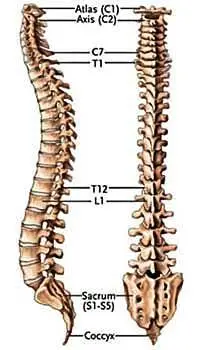
Humans are born with 33 separate vertebrae. By adulthood, most have only 24, due to the fusion of the vertebra in certain parts of the spine during normal development. The cervical spine consists of 7 vertebrae 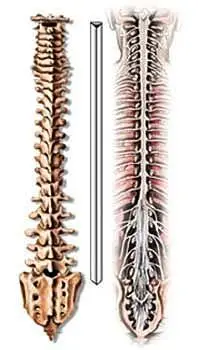
labeled C1 through C7, the thoracic spine consists of 12 vertebrae labeled T1 through T12, and the lumbar spine consists of 5 vertebrae labeled L1 through L5. Below the lumbar spine, nine vertebrae at the base of the spine grow together. Five form the triangular bone called the sacrum. The two dimples in almost everyone's back, A.K.A. ("dimples of Venus"), are where the sacrum joins the hipbones ("ilium"), and form the sacroiliac joint. The lowest four vertebrae form the tailbone or coccyx.
The anatomy of the spinal column is extremely well designed to serve many functions. All of the elements of the spinal column and vertebrae serve the purpose of protecting the spinal cord, which provides communication to the brain, mobility and sensation to and from the body, and movement, through the complex interaction of bones, ligaments and muscle structures of the back and the nerves that communicate to them. The back is also the powerhouse for the entire body, supporting our extremities and making all of the movements of our head, arms, and legs possible through complex muscle contraction and stabilization.